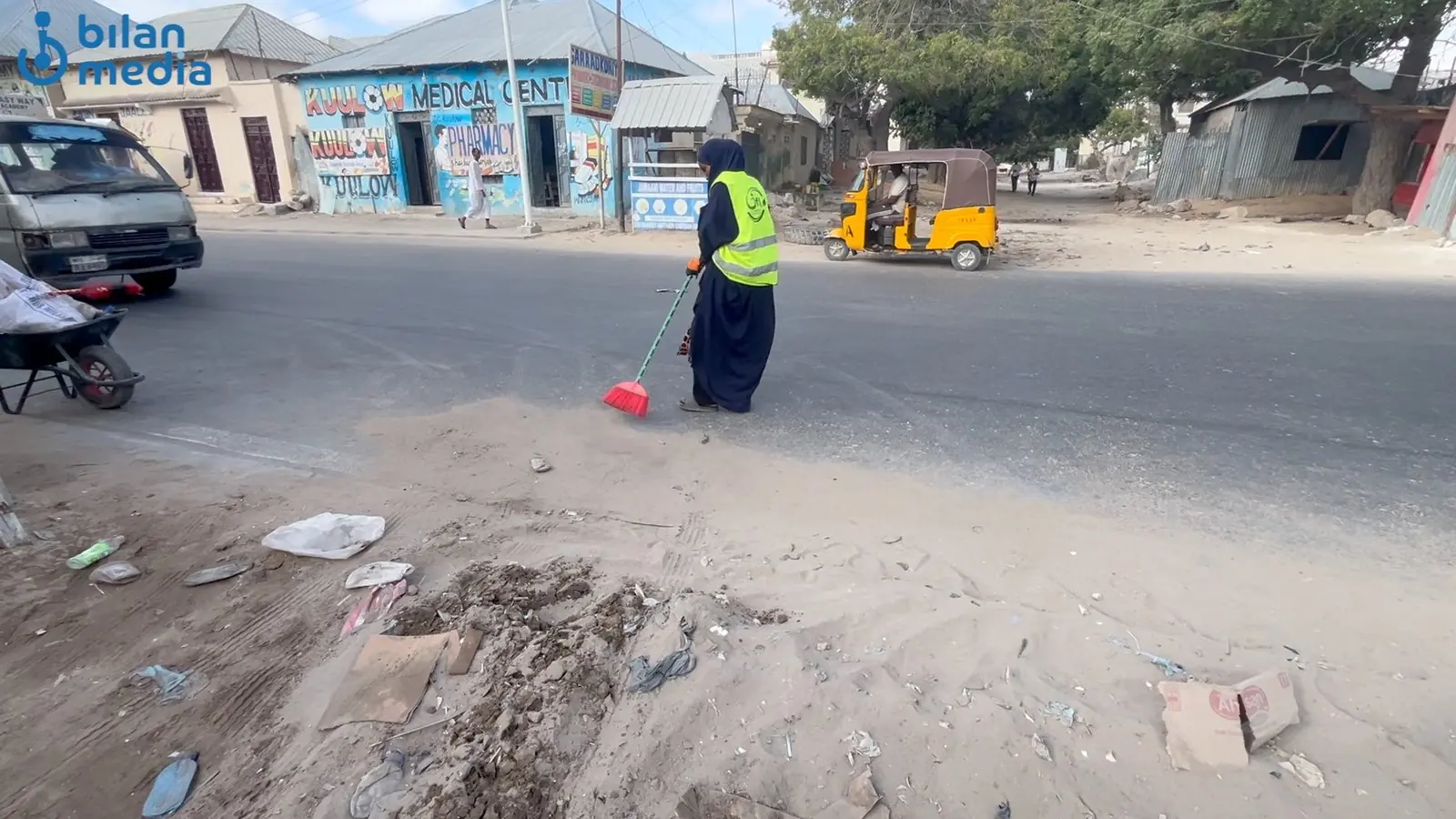

It is early in the morning, before the sun rises and the ground is cold, when Ajabo Abukar, a 63-year-old mother of seven children, begins her work. Wearing a light green jacket, old gloves and carrying plastic brooms, she sweeps along Towfiq Road which connects Towfiq and Misanka Dhuhusha junctions in the Yaqshiid district of Mogadishu.
After I pray the morning prayer, I come to the street to clean it. Sometimes I finish at three in the morning, and I come back again in the afternoon after the evening prayer.
Ajabo is not alone. Every morning, several women, most of them elderly, gather on this street to clean it before the day begins and the road becomes busy.
A few steps away, 22-year-old Hodan Ahmed sweeps alongside her. She is the second generation of her family to voluntarily clean the streets in Mogadishu. Hodan has been cleaning Towfiq Street for eight months — a task her mother used to do a year ago.
We take risks sometimes. The cars using this street don't just pass by; they hit our cleaning supplies, putting our safety at risk.
But the risks the women cleaners face go far beyond that.
When the broom finds a bomb
Ajabo Abukar has spent more than thirty years sweeping these streets and has encountered explosives more than five times while doing her work.
"One day while I was sweeping the road in Jira Garob, I saw two milk cans with their mouths sealed. I didn't know what they were, but when I looked, I saw a wire attached to them. I called someone, and he told me that it was an unexploded bomb. If it had exploded, it would have destroyed the entire area, just because it was so big," Ajabo explained.
If someone tells you to put it down while holding an unexploded bomb, what is left?
Although the women cleaners face risks, after the rebuilding of Towfiq Road, they feel relaxed — yet their work is often met with disregard.
"People who own businesses or live here spill water and dump garbage on the road," Hodan explains. "When you ask them not to, they say, 'You get paid to sweep and I don't.'"
Forty volunteers, zero salaries
More than 40 women volunteer to clean the streets of Yaqshiid district. None of them receive a salary, according to Kaho Abdi, the district's women's chairwoman.
We get some kind of help like garbage trucks, but when the women's brooms break, or when they need tools, they buy them themselves.
Even under the harshest conditions, they remain committed to cleaning their district.
"There is no hope of getting a salary, but we stand for the cleanliness of our district." — Ajabo Abukar