
Plastic pollution is one of the main environmental challenges facing the world today, with global plastic waste reaching 400 million tonnes annually, according to a report by the UN Environment Programme. In Somalia, the crisis is reshaping streets, markets and entire neighbourhoods — but in one Mogadishu factory, it is also reshaping lives.
Around the world, one million plastic bottles are purchased every minute, and up to five trillion plastic bags are used every year. In total, half of all plastic produced is designed for single‑use purposes, the report added.
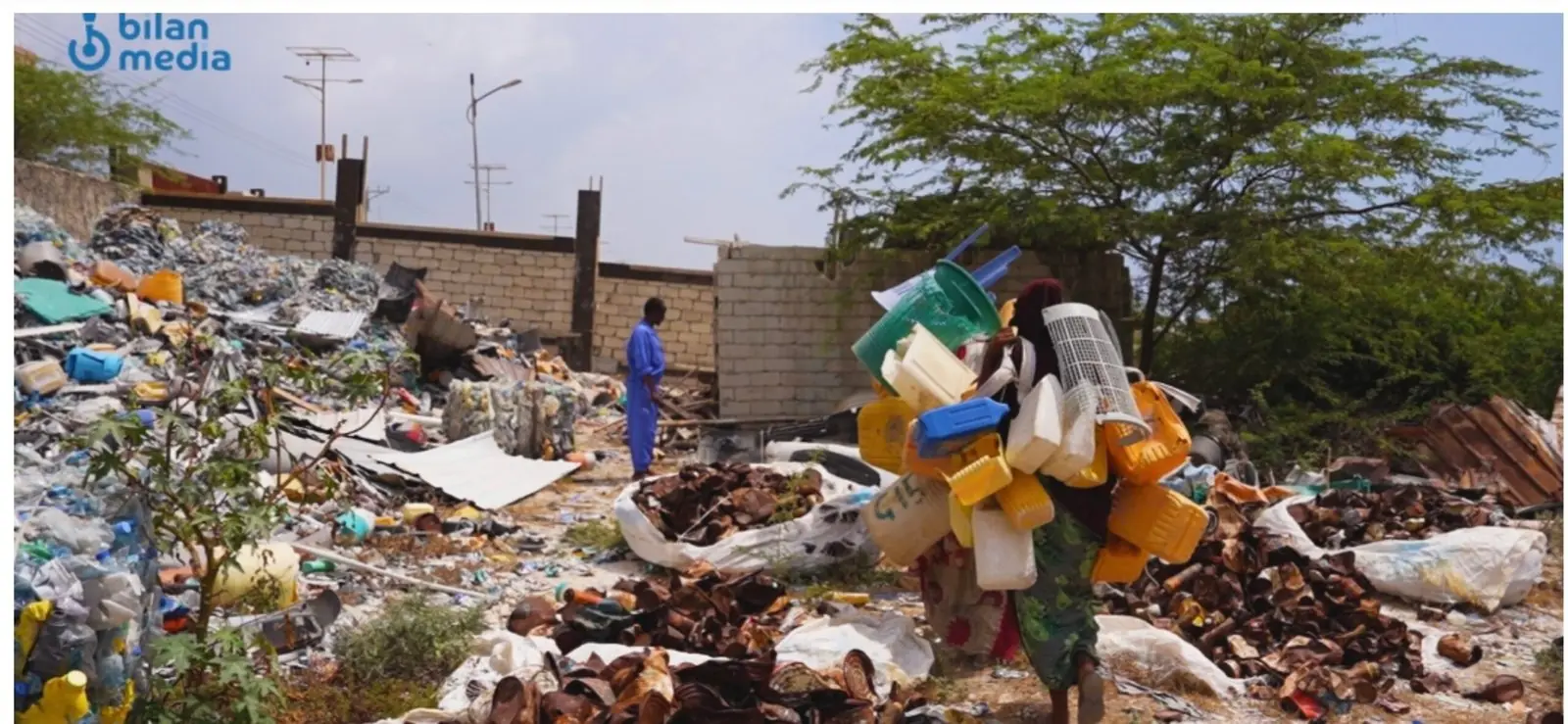
In Somalia, plastic waste is a major environmental issue due to rapid urbanisation, population growth and the lack of proper waste management systems. It stretches everywhere — in streets, markets, waste‑dumping sites, overcrowded residential areas and open public places.
In Mogadishu, home to nearly three million residents, single‑use plastics — water bottles, shopping bags, food packaging and more — are discarded after just one use. Despite the Somali Ministry of Environment and Climate Change banning single‑use plastic bags last year, they remain widely used due to their affordability, accessibility and the lack of alternatives, according to a recently published survey.
From the streets to a steady income
Displaced women are finding hope and income by collecting plastic waste from the streets of Mogadishu and selling it to the factory. One of them is Fatima Abdi Osman, a mother of nine who previously worked as a cleaner. After the factory was built, she switched to collecting plastic — which pays better.
I collect 24 kg of plastic bottles and get nearly 80,000 Somali shillings a day, which is approximately $3.
An environmental crisis with hidden costs
Environmental activist and lecturer Aided Hassan warns of the ecological damage caused by plastic waste. "Most of those plastic wastes end up in the soil, seas, lakes and rivers of the country. If these microplastics enter the soil, they can change its physical structure and limit its capacity to hold water, which can cause a reduction in root growth and nutrient uptake," he explained.
Used plastic bags are usually eaten by animals living on the streets, like cows. After they get sick, their meat is eaten by people.
When plastic waste enters the sea, it can harm or kill hundreds of marine species and threaten the habitats they depend on, he added.
"Waste is a Resource"
To address the growing problem of single‑use plastic threatening ecosystems, wildlife and the city's cleanliness, local businessman Abdi Hirsi Ali stepped up to tackle the issue.
He founded a factory called African Solution, whose motto is "Waste is a Resource". With more than 20 workers, the factory turns plastic waste into building materials — paving stones, wall bricks, roofing tiles — and organic fertiliser, as its operations manager Nasdurin Ali explained.
Monthly, we collect 30 metric tonnes of plastic waste but recycle only 20 tonnes, due to higher electricity prices.